


Prostate cancer is the most common cancer affecting Australian men (after non-melanoma skin cancer).
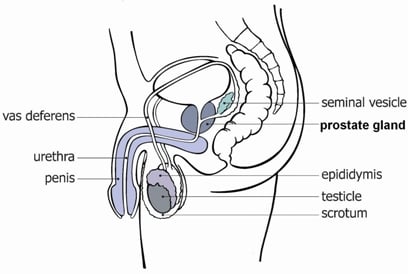
Prostate cancer is the growth of abnormal cells in the prostate gland. This gland is only found in males and is about the size of a walnut.
We don’t know exactly what causes prostate cancer, and right now, there isn’t a straightforward way to prevent it.
What is the chance of a diagnosis of prostate cancer?
Prostate cancer is the most diagnosed cancer in Australian men in 2026. Prostate cancer incidence in men increases gradually yearly with an estimated 29,000 cases diagnosed in 2025, accounting for 30% of the cancers to be diagnosed in males. It is the second most common cause of cancer death among Australian men with an estimated 4,000 deaths from prostate cancer in 2025.
What are the prostate cancer symptoms I need to look out for?
Prostate cancer may not show any symptoms in the early stages. Symptoms of early prostate cancer can include:
- difficulty passing urine
- a slow, interrupted flow of urine
- frequent passing of urine, including at night
- incontinence.
Symptoms associated with advanced prostate cancer include:
- blood in urine
- pain during urination
- lower back or pelvic pain.
These symptoms are also found in men who may have benign prostatic hyperplasia (BPH), a common, non-cancerous enlargement of the prostate gland.
If you experience these symptoms, book a visit to your doctor.
How is prostate cancer detected?
There is no single test to detect prostate cancer. The two most common tests are the prostate specific antigen (PSA) blood test and the digital rectal examination (DRE).
The PSA test measures the level of PSA in your blood. It does not specifically test for cancer. Most PSA is produced by the prostate gland and the normal range depends on your age. A PSA above the typical range may be a sign of prostate cancer. However, two-thirds of cases of raised via PSA are due to noncancerous conditions such as prostatitis and BPH.
A DRE is conducted by a urologist to feel the prostate. DRE is no longer recommended as a routine test for men who do not have symptoms of prostate cancer, though it may be used to check for any changes in the prostate before doing a biopsy.
If either of these tests show an abnormality, other tests are needed to diagnose prostate cancer. Usually a magnetic resonance imaging (MRI) scan and transrectal ultrasound (TRUS) biopsy would be used in this case.
Should I have a PSA test?
If you don't have symptoms of prostate cancer and are thinking about having a PSA test, you should ask your doctor about the risks and benefits.
While some studies suggest PSA reduces mortality on a population basis, the test picks up large numbers of cancers that would have caused no symptoms or harm in the patient. This is known as overdiagnosis. Overdiagnosis of prostate cancer can lead to unnecessary treatments that have side effects such as sexual impotence, urinary incontinence and bowel problems.
It is important to balance the potential benefit of detecting a prostate cancer early against the risk that detection and treatment may not be necessary. Treatment may affect your lifestyle, but it could also save your life.
Make your own decision about whether to be tested after a discussion with your doctor so you can make an informed decision.
Screening tests for breast, bowel and cervical cancer can save lives, but there is still confusion around PSA testing for prostate cancer. Find more information here.
Remember, if you have any concerns or questions, please contact your doctor.