


Most Australian parents would remember Sid Seagull teaching us to be SunSmart back in the 1980s. Fast forward 45 years and our cutest sun-safe ambassador, Little Sid Seagull has arrived, reminding us that it's time to pass those habits on... because sun-safe habits last a lifetime.
When the UV Index is 3 or above, it's important to protect your skin in five ways: Slip, Slop, Slap, Seek and Slide.
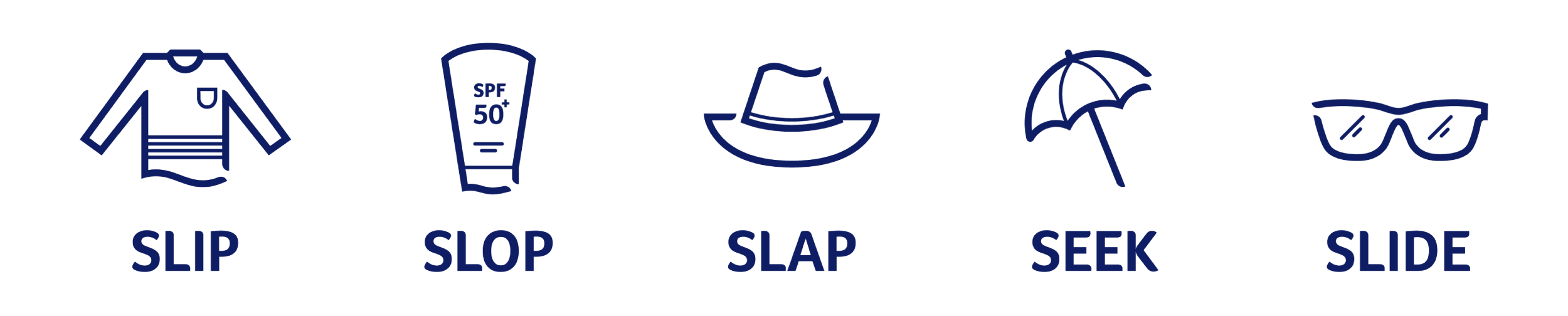
Cover as much skin as possible with clothing that protects your shoulders, arms, chest and back. Choose styles that provide good coverage of shoulders, chest and neck if possible and are lightweight and comfortable. The more tightly woven the fabric, the greater the sun protection so it’s always a good idea to have sunscreen on underneath as well if you’re not sure.
Don't rely on clothing alone. Remember to Slip, Slop, Slap, Seek and Slide.
Apply SPF50 or SPF50+, broad-spectrum, water-resistant sunscreen to clean, dry skin 20 minutes before going outdoors. Reapply every two hours, and more often after swimming, sweating or towel drying. It's easy to miss areas such as ears, the back of the neck, tops of feet and backs of hands so make sure you cover these too!
Sunscreen shouldn't be your only form of sun protection. Remember to Slip, Slop, Slap, Seek and Slide.
Wear a hat with a broad brim so that it creates shade for your face, neck and ears. Caps and visors don't provide enough protection for these areas so a bucket hat or legionnaires style hat is best. Kids are three times more likely to wear a hat if they see their parents doing the same.
Hats should be worn when the UV is 3 or above, but always remember to Slip, Slop, Slap, Seek and Slide too.
Seek shade whenever possible, especially when UV levels are 3 or above. Shade can include trees, shelters, verandahs and purpose-built shade like beach umbrellas or cabanas.
UV radiation can reflect off surfaces like water, sand, snow and concrete so make sure you use all five forms of sun protection: Slip, Slop, Slap, Seek and Slide
Protect your eyes from damaging UV radiation by wearing close-fitting sunglasses that meet Australian standards and provide good UV protection. Ideally choose wraparound sunglasses as the UV can enter round the sides and edges of the sunglasses too.
For best protection always wear sunglasses with a broad-brimmed hat and remember to Slip, Slop, Slap, Seek and Slide.
Spending time outdoors is part of everyday life, especially if you're a parent with young children. But Australia has some of the highest levels of ultraviolet (UV) radiation in the world, which means sun protection isn't just something to think about at the beach - it matters at the park, on the sports field, during the school (or coffee!) run and whenever the UV Index is 3 or above.
Sun safety is a skill to pass on
The good news is that sun protection is a skill we can learn – but can also pass on. Similar to brushing our teeth or wearing a seatbelt, sun-safe behaviours become easier when they're part of our normal routine.
50% of lifetime UV exposure happens before aged 20 and childhood sunburn can approximately double melanoma risk.
The habits we show our children now can help protect their skin from sun damage and reduce the risk of developing skin cancer later in life. Remember, it's never too late to start protecting yourself from the sun by using all five forms of sun protection.
The sun-safe habits we build today can last a lifetime.
Skin cancer is Australia’s most common, most costly cancer, and yet it’s also one of our most preventable.
Why good habits start early
We know that children learn by watching the people around them. So, whether it's putting on sunscreen before heading outdoors, grabbing a wide-brim hat at the front door, or seeking shade under a tree or cabana when the UV is 3 or above - the behaviours children see at home can help build the habits they keep forever.
Whether you’re a parent, grandparent or carer, we can all play an important role in everyday sun safety. When children grow up seeing sun protection as a normal part of being outside, they are more likely to carry those habits with them as they get older.
Small actions matter!
Start small and build. Some ideas for creating a sun-safe habit routine could be:
- A quick family sunscreen session before weekend sport.
- Packing protective clothing for a day at the beach and leaving a spare set in the car.
- When you’re out and about, set a timer of your phone every two hours to remind yourself to reapply sunscreen. And don’t forget to reapply after showers, swimming or towel drying!
- Checking the UV Index before leaving the house on a weather app – get the kids involved too!
On their own, these habits may seem small, but over time, they can become lifelong habits that help protect your family's skin health for years to come.
Simple ways to pass on good sun safe habits
Building sun-safe habits into your daily life doesn't have to be complicated. In fact, the best ones should fit naturally into your routine! Children learn from everyone around them, and seeing their parents, grandparents, carers, teachers or other adults being SunSmart means they will be more likely to do be sun safe too.
A child is 13x more likely to use sunscreen and is 3x more likely to wear a hat if they regularly see their parents doing the same.
Understanding the UV Index
Ultraviolet (UV) radiation is dangerous because it’s not like the sun’s light which we see, or the sun’s heat which we feel, so it can be damaging our skin without us knowing. What many people forget, is that UV radiation can be high even on cool or overcast days. So, you can't rely on clear skies or high temperatures to determine when you need to protect yourself from the sun. The higher the UV level the greater the risk of sun damage so knowing the UV rating for that day is an important way to make sure everyone stays sun safe, whatever the weather!
Why do we need all five forms of sun protection?
When the UV Index is 3 or above, it's important to protect your skin in five ways: Slip, Slop, Slap, Seek and Slide.
While each step helps, no one form of sun protection can do the whole job. SPF 50 or SPF 50+ sunscreen works by protecting areas of exposed skin; a hat and sunglasses work together to protect the face, ears, neck and eyes from UV radiation, We know that UV radiation reflects off surfaces such as water, sand or concrete so you will still need to use all other forms of sun protection even when you are in the shade.
By using all five forms of protection together you're making sure you keep you and your family safe from the effects of UV radiation. And remember, small actions every day can become lifelong sun-safe habits.
Sun safe habits really should last a lifetime
2 in 3 Australians will be diagnosed with skin cancer in their lifetime, but thankfully, much of the risk is preventable. By protecting you and your family's skin from the sun, whenever the UV Index is 3 or above, together we can reduce the skin cancer risk for ourselves and future generations.