

Types of cancer
Mesothelioma symptoms, risks and screening
Understand the symptoms, key risk factors, diagnosis of type and staging of mesothelioma.


Last updated:
Sources and references 
What can I expect?
The plan for what happens if you have mesothelioma can vary from person to person, but is usually as follows:
- Diagnosis and staging – You will have various tests to confirm a diagnosis of mesothelioma and work out how far it has progressed. The results will help you and your health professionals make decisions about treatment.
- Treatment – Depending on how advanced the mesothelioma is and other factors, treatment may achieve a longer period of disease control and improve quality of life.
- Managing symptoms – For many people, the main goal of treatment will be to manage symptoms and improve quality of life. Depending on how mesothelioma affects your health, you may have periods of relatively good health when symptoms are under control or less active. You may also have periods when symptoms need to be relieved with more intensive treatment.
What are the symptoms of mesothelioma?
The first signs of mesothelioma are often vague and similar to other conditions. If you are concerned, see your general practitioner (GP). It can take time to be diagnosed, as the symptoms may come and go, and more common conditions are often investigated first. Let your GP know if you think you have been exposed to asbestos in the past. Finding mesothelioma early may mean more treatment options are available to you.
Pleural mesothelioma may cause:
- shortness of breath (breathlessness), which usually feels worse with activity or when you are lying down
- pain in the chest around the ribs or in the shoulder, which may be sharp and stabbing, worse with deep breaths, or dull and persistent
- extra-sensitive skin or change in skin sensation (less common)
- general symptoms such as loss of appetite with weight loss; loss of muscle bulk; fatigue or loss of energy; a persistent cough or a change in coughing pattern; and night sweats.
Peritoneal mesothelioma may cause:
- abdominal pain
- a swollen abdomen
- poor appetite, nausea and vomiting
- unexplained increase in fatigue and low energy
- night sweats or fever
- bowel or urinary problems.
What are the different types of mesothelioma?
Pleural mesothelioma
The mesothelium (protective membrane) that covers each lung is called the pleura. Mesothelioma that develops in the pleura is called pleural mesothelioma, and accounts for about 92% of mesothelioma cases. Pleural mesothelioma is not the same as lung cancer – it is diagnosed and treated differently.
The pleura
There are 2 layers of tissue in the pleura. The inner layer (the visceral pleura) covers the lung surface, and the outer layer (the parietal pleura) lines the chest wall and diaphragm. Mesothelioma causes these 2 layers of the pleura to thicken. They can then press on the lung, stopping it expanding when you breathe in (inhale).
Between the 2 layers of the pleura is the pleural cavity (also called the pleural space), which normally contains a thin film of fluid. This fluid allows the 2 layers of pleura to slide over each other – so the lungs move smoothly against the chest wall when you breathe. When too much fluid collects in the pleural cavity, it is called pleural effusion.
The respiratory system
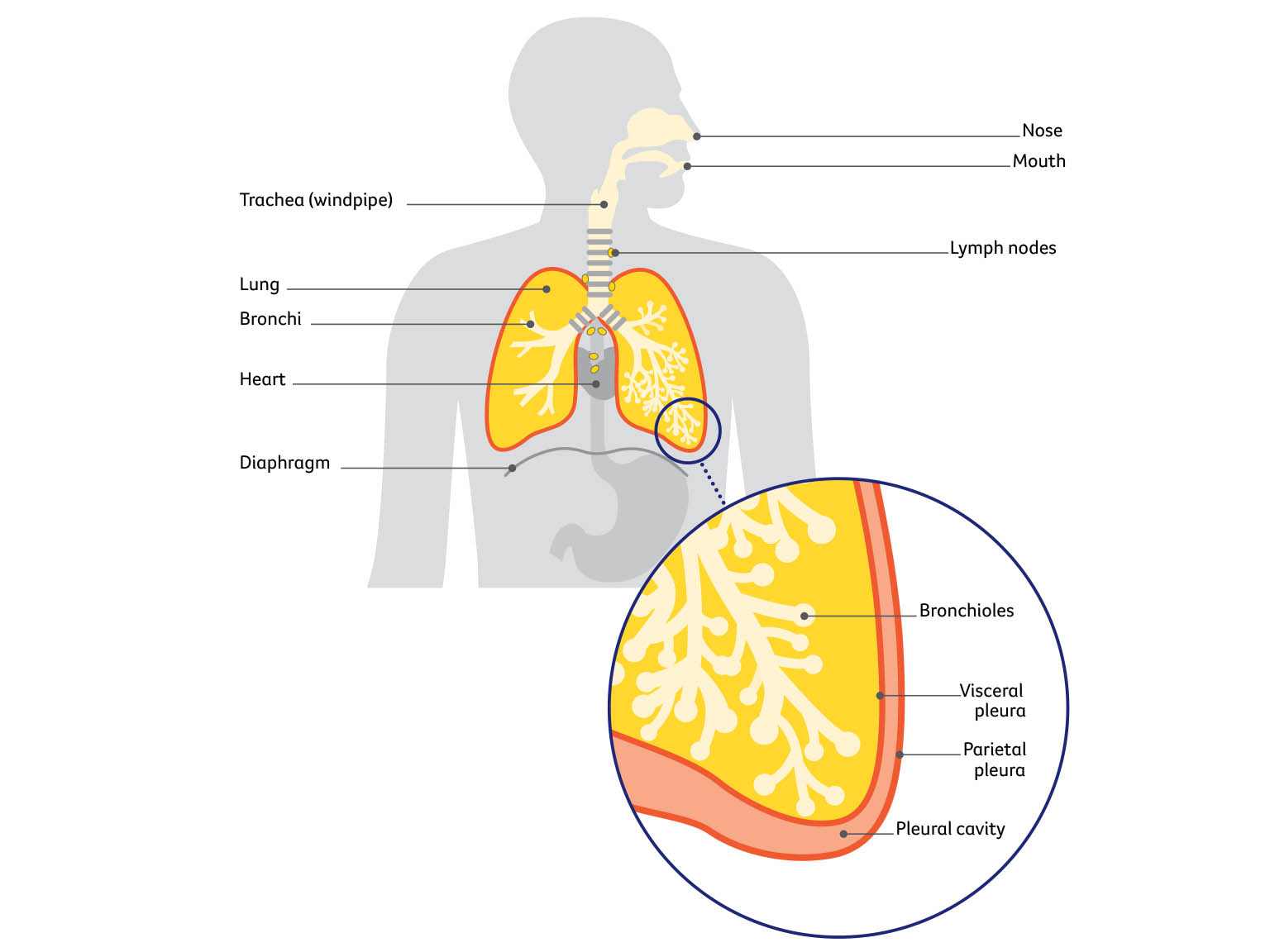
Pleural mesothelioma affects the pleura – the membrane that covers the lungs. The lungs are the main organs used for breathing. They are part of the respiratory system, along with the nose, mouth, windpipe (trachea), large airways (bronchi) and smaller airways (bronchioles). The lungs rest on the diaphragm – a wide, thin muscle that helps you to breathe.
Peritoneal mesothelioma
The mesothelium (protective membrane) that covers the organs and lines the walls of the abdomen and pelvis is called the peritoneum.
Mesothelioma that develops in the peritoneum is known as peritoneal mesothelioma. It is far less common than pleural mesothelioma (which is found around the lungs), and accounts for less than 5% of all mesotheliomas.
The peritoneum
There are 2 layers of thin tissue in the peritoneum. The inner layer (the visceral peritoneum) lines the surface of organs such as the bowel, liver and ovaries. The outer layer (the parietal peritoneum) lines the walls of the abdomen and pelvis.
Between the 2 layers of the peritoneum is the peritoneal cavity, which normally contains a very thin film of fluid. This fluid allows the 2 layers to slide over each other. In people with peritoneal mesothelioma, too much fluid often collects between the 2 layers in this cavity. This is called ascites or peritoneal effusion.
Mesothelioma in other parts of the body
In rare cases, mesothelioma can develop in the pericardium, which is a thin, double-layered sac that surrounds the heart. This is called pericardial mesothelioma.
Even more rarely, mesothelioma can occur in the membrane that surrounds the testicles, known as the tunica vaginalis. This is called testicular mesothelioma.
The abdomen and pelvis
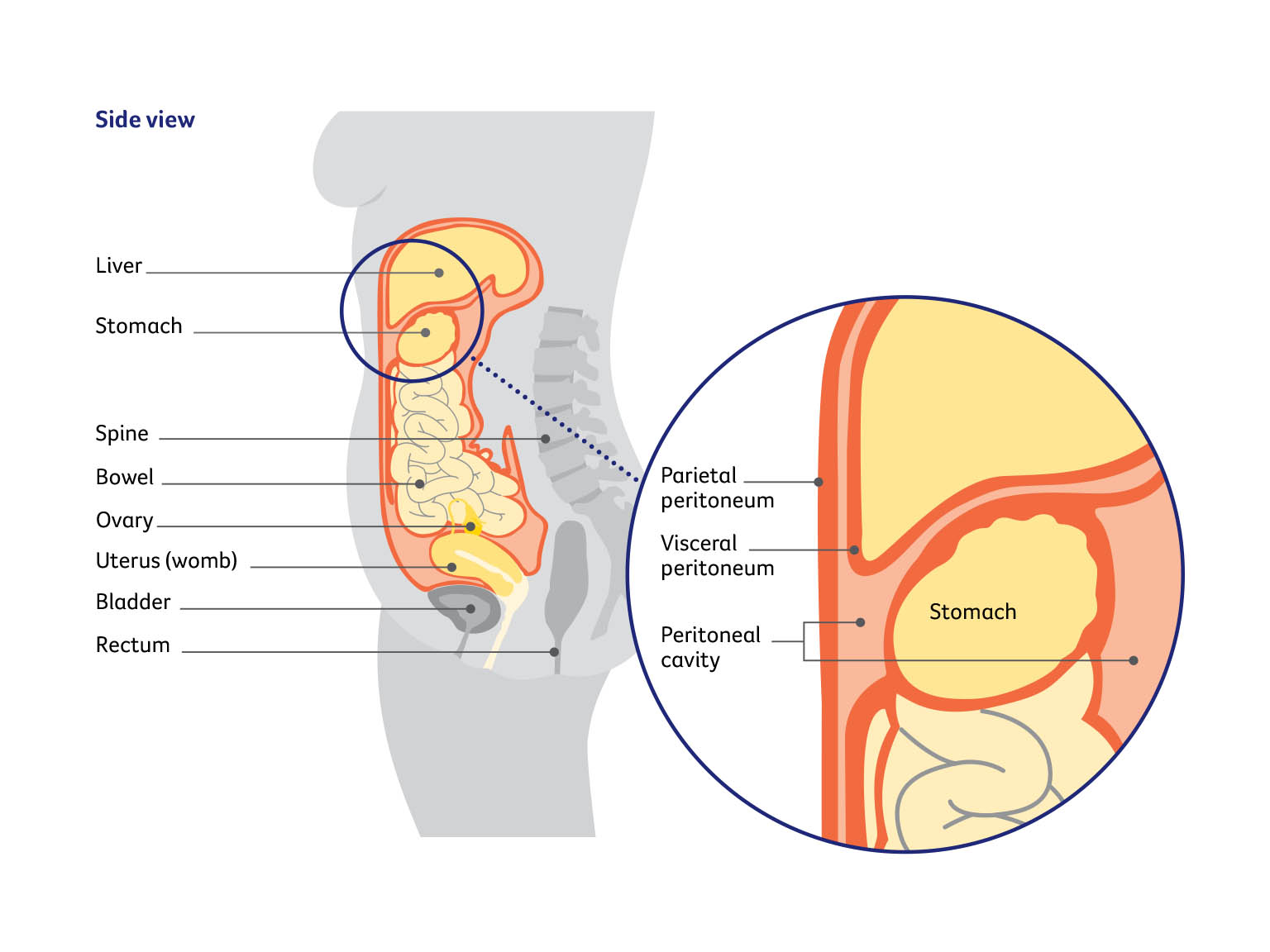
Peritoneal mesothelioma affects the peritoneum – the membrane that lines the walls and covers the organs of the abdomen and pelvis. These organs include the stomach, bowel, liver, kidneys and, in females, the uterus and ovaries.
Can I seek compensation?
People who develop mesothelioma due to asbestos exposure may be able to make a claim for compensation. It’s helpful to make notes and talk to family and friends about when and where you may have been exposed to asbestos.
It is important to get advice from an experienced lawyer as soon as possible after diagnosis, because a case for compensation must be started within your lifetime. Mesothelioma or asbestos support groups may be able to help you with more information about seeking compensation.
Which health professionals will I see?
Your GP will arrange the first tests to assess your symptoms. If these tests do not rule out mesothelioma, you will usually be referred to a specialist, such as a respiratory physician or gastroenterologist. The specialist will arrange further tests.
If mesothelioma is diagnosed, the specialist will consider the treatment options. Often these will be discussed with other health professionals at what is known as a multidisciplinary team (MDT) meeting. During and after treatment, you will see a range of health professionals who specialise in different aspects of your care.
Health professionals you may see
- GP assists you with treatment decisions and works in partnership with your specialists in providing ongoing care
- respiratory (thoracic) physician diagnoses diseases of the lungs, including pleural mesothelioma, and recommends ways to treat any symptoms
- gastroenterologist diagnoses and treats disorders of the digestive system, including peritoneal mesothelioma
- radiologist analyses x-rays and scans; an interventional radiologist may also perform a biopsy under ultrasound or CT, and deliver some treatments
- pathologist examines cells and tissue samples to work out the type and extent of mesothelioma
- thoracic (respiratory) surgeon conducts some biopsy procedures and performs surgery to prevent and treat symptoms of pleural mesothelioma, including radical surgery
- surgical oncologist/ surgeon specialised in mesothelioma performs surgery to prevent and treat symptoms of peritoneal mesothelioma
- medical oncologist treats cancer with drug therapies such as chemotherapy, immunotherapy and targeted therapy (systemic treatment)
- radiation oncologist treats cancer by prescribing and overseeing a course of radiation therapy
- palliative care specialist treats pain and other symptoms to maximise wellbeing and improve quality of life
- palliative care team work closely with the GP and other specialists to help control symptoms such as pain, breathlessness, nausea and anxiety, and maintain quality of life
- nurse administers drugs and provides care, support and information throughout treatment
- cancer care coordinator coordinates your care, liaises with other members of the MDT and supports you and your family throughout treatment; care may also be coordinated by a clinical nurse consultant (CNC) or clinical nurse specialist (CNS)
- community nurse visits you at home to provide medical care and treatment, assesses your needs for supportive care, and liaises with your GP and MDT as required
- dietitian helps with nutrition concerns and recommends changes to diet during treatment and recovery
- physiotherapist, exercise physiologist, occupational therapist assist with physical and practical problems, including restoring movement and mobility after treatment and recommending aids and equipment
- social worker links you to support services and helps you with emotional, practical and financial issues
- psychologist helps you manage your emotional response to diagnosis and treatment.
Screening for mesothelioma
There is currently no national screening program for mesothelioma available in Australia.
Sources and references
Understanding Mesothelioma - A guide for people with cancer, their families and friends
Acknowledgments
This edition has been developed by Cancer Council NSW on behalf of all other state and territory Cancer Councils as part of a National Cancer Information Subcommittee initiative.
All updated content has been clinically reviewed by A/Prof Anthony Linton, Medical Oncologist, Concord Cancer Centre and Concord Repatriation General Hospital, NSW; Dr Naveed Alam, Thoracic Surgeon, St Vincent’s Private Hospital Melbourne and Monash Medical Centre, VIC; Prof David Morris, Peritonectomy Surgeon, St George Hospital and UNSW, NSW.
This edition is based on the previous edition, which was reviewed by the following panel: A/Prof Anthony Linton (see above); Dr Naveed Alam, (see above); Donatella Arnoldo, Consumer; Polly Baldwin, 13 11 20 Consultant, Cancer Council SA; Dr Melvin (Wee Loong) Chin, Medical Oncologist, Sir Charles Gairdner Hospital and National Centre for Asbestos Related Diseases, WA; Prof Kwun Fong, Thoracic and Sleep Physician and Director, UQ Thoracic Research Centre, The Prince Charles Hospital, and Professor of Medicine, The University of Queensland, QLD; Vicki Hamilton OAM, Consumer and CEO, Asbestos Council of Victoria/ GARDS Inc., VIC; Dr Susan Harden, Radiation Oncologist, Peter MacCallum Cancer Centre, VIC; Penny Jacomos, Social Worker, Asbestos Diseases Society of South Australia, SA; Prof Brian Le, Director, Parkville Integrated Palliative Care Service, The Royal Melbourne Hospital and Peter MacCallum Cancer Centre, VIC; Lung Cancer Support Nurses, Lung Foundation Australia; Jocelyn McLean, Mesothelioma Support Coordinator, Asbestos Diseases Research Institute, NSW; Prof David Morris (see above); Joanne Oates, Registered Occupational Therapist, Expert Witness in Dust Diseases, and Director, Evaluate, NSW; Chris Sheppard and Adam Barlow, RMB Lawyers.
We also thank the health professionals, consumers and editorial teams who worked on previous editions of this title. Previous editions of this title and related resources were funded in part by the Heads of Asbestos Coordination Authorities and a donation from Lyall Watts.

Mesothelioma
Cancer Council 13 11 20
Call us to talk to a specially trained health professional for free and confidential support and information.
Guide to best cancer care
This mesothelioma guide explains the standard of high-quality cancer care that all Australians can expect, from diagnosis, to treatment, recovery, and living with cancer.