

Uterine cancer
About uterine cancer
Learn about the uterus, its function, symptoms to look out for and the difference between the two types of uterine cancer.


Last updated:
Sources and references 
What is uterine cancer?
Cancer of the uterus (also called uterine cancer) occurs when cells in any part of the uterus become abnormal, grow out of control and form a lump (tumour). It can be either endometrial cancer (which accounts for about 95% of cancers of the uterus) or the less common uterine sarcoma (which accounts for about 5%).
Endometrial cancer
This cancer begins in the cells in the lining of the uterus (called the endometrium). Endometrial cancer is divided into 4 main subtypes.3 Knowing these subtypes helps the doctor to work out what, if any, treatment is needed after surgery. Tests on tissue samples collected before or during surgery help the doctor to work out the subtype. The 4 subtypes are:
- POLE mutant – usually treated with surgery only; often has a good outcome
- mismatch repair deficient (MMRd) – additional treatment like immunotherapy may be needed after surgery; may be inherited (e.g. Lynch syndrome)
- p53 abnormal – usually needs treatment after surgery
- no specific molecular profile (NSMP) – may need treatment after surgery.
Uterine sarcoma
These rare soft tissue cancers develop in the cells in the muscle of the uterus (myometrium) or connective tissue (stroma). There are 3 types of uterine sarcoma: endometrial stromal, leiomyosarcoma and undifferentiated.
The uterus
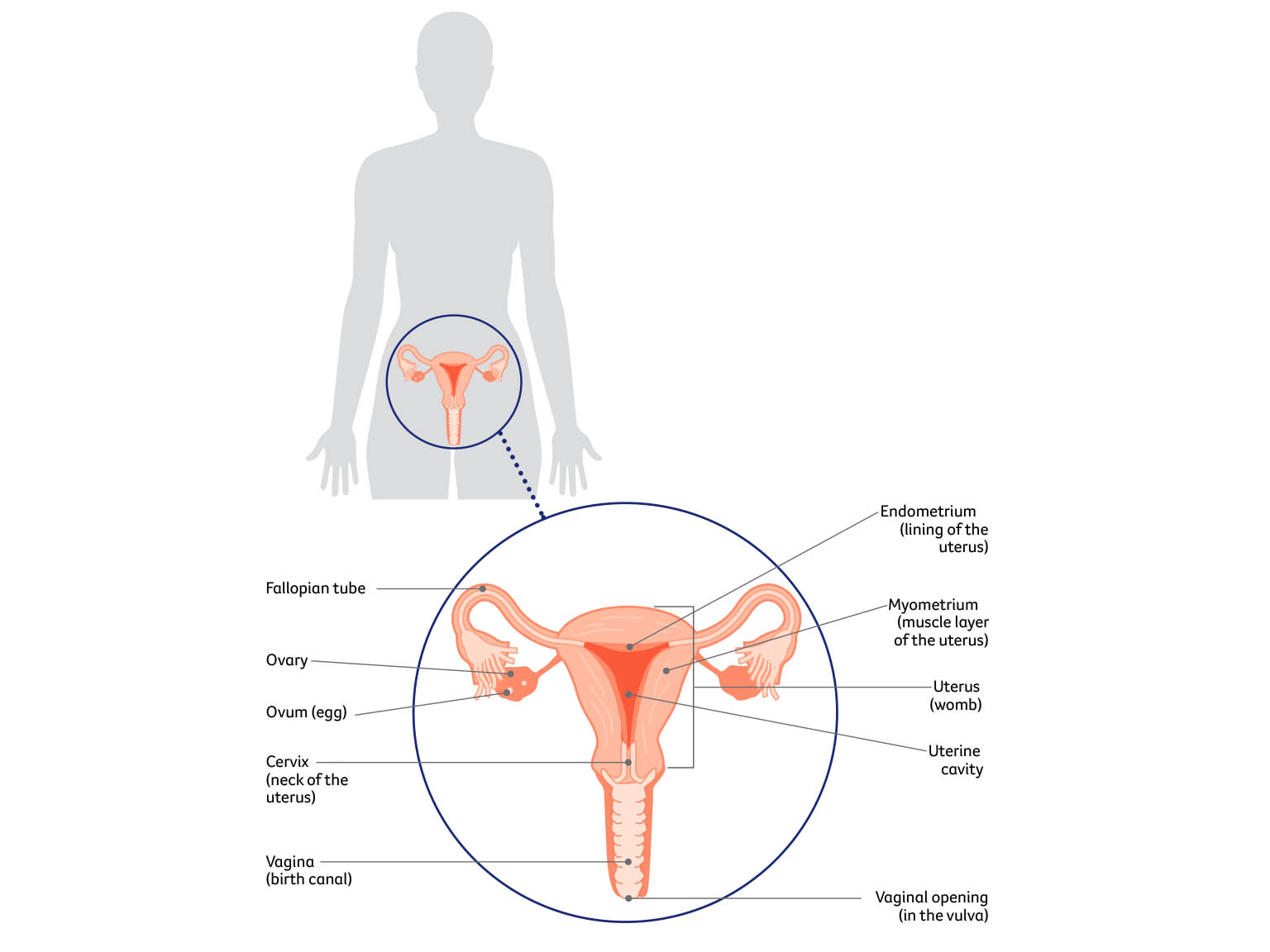
The uterus, or womb, is where a baby grows during pregnancy. It is part of the female reproductive system, which also includes the ovaries, fallopian tubes, cervix (neck of the uterus), vagina (birth canal) and vulva (external genitals).
Shape and position in the body – The uterus is about the size and shape of a hollow, upside-down pear. It sits low in the abdomen (belly) between the bladder and rectum, and is joined to the vagina by the cervix. The ovaries sit on either side of the uterus. The ovaries contain eggs (ova) and are connected to the uterus by the fallopian tubes.
Layers – The uterus has 2 layers. The myometrium is the outer layer of muscle tissue and makes up most of the uterus. The endometrium is the inner layer or lining.
Menstruation – Each month, from puberty to menopause, the endometrium becomes thicker to prepare for pregnancy. If a pregnancy does not occur, some of the lining is shed and flows out of the body through the vagina. The flow is called a monthly period or menstruation.
Menopause – The hormones oestrogen and progesterone control the release of eggs (ovulation) and the timing of menstruation. As you get older, the ovaries gradually produce less of these hormones. When the levels of oestrogen and progesterone fall low enough, periods become irregular and finally stop. This is known as menopause. After menopause, it is not possible to conceive a child naturally. The uterus also becomes smaller and the endometrium becomes thinner.
The female reproductive system
How common is uterine cancer?
Each year, about 3400 Australian women are diagnosed with cancer of the uterus, and most are over 50 years of age.4 Cancer of the uterus is the fifth most common cancer in women and the most commonly diagnosed gynaecological cancer (cancer affecting the female reproductive system).
The number of women diagnosed with cancer of the uterus has increased in recent years, including in younger women. This is likely to be linked to rising rates of obesity and diabetes, as well as more people living to older ages.
Anyone with a uterus can get cancer of the uterus – women, transgender men, non-binary people and people with intersex variations. For information specific to you, speak to your doctor.
It is estimated that 3,493 people were diagnosed with uterine cancer in 2025. The average age at diagnosis is 65 years old.
Sources and references
Acknowledgments
This edition has been developed by Cancer Council NSW on behalf of all other state and territory Cancer Councils as part of a National Cancer Information Subcommittee initiative. All updated content has been clinically reviewed by Professor Alison Brand, Clinical Professor, The University of Sydney and Director, Department of Gynaecological Oncology, Westmead Hospital, NSW. This edition is based on the previous edition, which was reviewed by the following panel: A/Prof Orla McNally, Consultant Gynaecological Oncologist, Director Oncology/Dysplasia, Royal Women’s Hospital, Honorary Clinical Associate Professor, University of Melbourne, and Director of Gynaecology Tumour Stream, Victorian Comprehensive Cancer Centre, VIC; A/Prof Yoland Antill, Medical Oncologist, Peninsula Health, Parkville Familial Cancer Centre, Cabrini Health and Monash University, VIC; Grace Guerzoni, Consumer; Zeina Hayes, 13 11 20 Consultant, Cancer Council Victoria; Bronwyn Jennings, Gynaecology Oncology Clinical Nurse Consultant, Mater Hospital Brisbane, QLD; A/Prof Christopher Milross, Director of Mission and Radiation Oncologist, Chris O’Brien Lifehouse, NSW; Mariad O’Gorman, Clinical Psychologist, Liverpool Cancer Therapy Centre and Bankstown Cancer Centre, NSW. We would like to thank all the health professionals, consumers and editorial teams who have worked on current and previous editions of this title.
References
1. National Comprehensive Cancer Network (US), NCCN Clinical Practice Guidelines in Oncology (NCCN Guidelines): Uterine Neoplasms, Version 3.2025.
2. Gynaecological Oncology Network, Gynaecological Cancer: A Guide to Clinical Practice in NSW, Agency for Clinical Innovation, Chatswood, 2019.
3. Dagher C et al., “Moving into the modern era of molecular classification for endometrial cancer,” Journal of Surgical Oncology, vol. 129, iss. 1, 2024, pp. 120-125.
4. Australian Institute of Health and Welfare (AIHW), Cancer Data in Australia, AIHW, Canberra, viewed 12 September 2025, available from: aihw.gov.au/reports/cancer/ cancer-data-in-australia.

Uterine Cancer
Cancer Council 13 11 20
Call us to talk to a specially trained health professional for free and confidential support and information.