

Uterine cancer
Managing side effects of uterine cancer
Treatments for cancer of the uterus can cause side effects affecting sexual function, urinary control, fertility and fatigue. Many side effects can be managed with medical treatments, lifestyle changes, exercise, and support from healthcare professionals.


Last updated:
Sources and references 
It will take some time to recover from the physical and emotional changes caused by treatment. Treatment side effects can vary – some people experience many side effects, while others have few. Side effects may last from a few weeks to a few months or, in some cases, years or permanently. This chapter includes ways to reduce or manage the discomfort that side effects may cause.
Some treatment side effects may not show up for many months or years. These are called late effects. Before treatment starts, talk to your doctor about whether you are at risk of developing late effects from your treatment and what you can do to help prevent them. After treatment, make sure to see your GP for regular health checks.
Menopause
The ovaries produce the hormones oestrogen and progesterone. If both ovaries have been removed or you’ve had radiation therapy to the pelvic area, your body will no longer produce these hormones and you will stop having periods. This is called menopause. For most women, menopause is a natural and gradual process that starts between the ages of 45 and 55. If you have not already entered menopause, these treatments will cause sudden menopause. If you have already been through menopause, the symptoms of menopause may come back.
Menopause symptoms include hot flushes, night sweats, dry or itchy skin, mood swings, trouble sleeping (insomnia), tiredness, aching joints, vaginal dryness, weight gain and bladder problems. You may also have a decreased interest in sex (low libido).
The symptoms of menopause caused by cancer treatment are usually more severe than during a natural menopause because the body hasn’t had time to get used to the gradual decrease in hormone levels.
Menopause may cause other changes in the body. For example, your cholesterol levels may rise, which can increase your risk of heart disease. Over time, your bones may become weak and brittle, and break more easily. This is called osteoporosis. Radiation therapy to the pelvis can also weaken the bones.
Fertility issues
Surgery or radiation therapy for cancer of the uterus may mean you are unable to become pregnant. Before treatment starts, ask your doctor or a fertility specialist about what options are available to you if you were hoping to have a baby.
It may be possible to preserve the ovaries (e.g. if you are 45 years or under) and sometimes the uterus, so you can still have children. However, this is an option only in certain cases, and your doctor will explain the risks and benefits.
Learning that your reproductive organs will be removed or will no longer function and that you won’t be able to have children can be devastating. Even if your family is complete or you did not want children, you may still experience a sense of loss and grief. These reactions are normal. Speaking to a counsellor, psychologist, social worker or a cancer nurse about your feelings and individual situation can be helpful. You can also call Cancer Council 13 11 20 to talk to a health professional about your concerns.
Fatigue
It is common to feel very tired and lack energy during and after treatment. This can be a side effect of the treatment itself or a symptom
of menopause. Travelling to hospitals and clinics for treatment and appointments can be exhausting. Dealing with your emotions can also cause fatigue. Your tiredness may continue for a while after treatment has finished.
Fatigue may affect your ability to keep working or care for your home and family. It may help to talk with your family and friends about how you feel, and discuss ways they can help you.
Bladder changes
Treatment for cancer of the uterus can cause bladder problems. Most bladder side effects are temporary or can be managed.
Urinary incontinence – This is when you have trouble controlling your bladder and you leak urine (wee). Strengthening the pelvic floor muscles can help control the flow of urine. A women’s health physiotherapist or continence nurse can develop a bladder training program – ask your doctor for a referral or contact the National Continence Helpline on 1800 33 00 66 or visit continence.org.au. You can also find a guide to exercising the pelvic floor muscles in our Exercise for People Living with Cancer booklet. Using continence pads or special types of absorbent underwear can help you manage leakage.
Radiation cystitis – Radiation therapy can irritate the lining of the bladder. You may feel like you want to pass urine often or have a burning sensation when you pass urine. Called radiation cystitis, it usually gets better after treatment. Try to drink plenty of water or use a urinary alkaliser (e.g. Ural) to help reduce the burning sensation. You can buy urinary alkalisers from your pharmacy. Your doctor may also prescribe medicine to treat cystitis.
Blood in urine – The blood vessels in the bladder can become more fragile after radiation therapy. This can cause blood to appear in your urine, even months or years after treatment. Always let your doctor know if you notice new or unusual bleeding.
Bowel changes
Treatment for cancer of the uterus can affect the way the bowels work. These changes are usually temporary, but for some people, they can be permanent and can have a significant impact on quality of life. Talk to your treatment team if you are finding bowel issues hard to manage.
Constipation – Constipation is when you have difficulty having a bowel movement (pooing) regularly or often. It is important to avoid constipation, especially in the days after surgery, because it may lead to more discomfort or cause you to strain when you’re sitting on the toilet. Talk to your dietitian or doctor about making changes to your diet or taking medicines if you are constipated.
Diarrhoea – Diarrhoea is the frequent passing of loose, watery faeces (poo) from the bowels. A dietitian can suggest changes to your diet to reduce the number of bowel movements.
Radiation proctitis – Radiation therapy can damage the lining of the rectum, causing inflammation and swelling known as radiation proctitis. This can cause a range of symptoms including blood in bowel movements; diarrhoea; the need to empty the bowels urgently; and loss of control over the bowels (faecal incontinence). Radiation proctitis usually gets better after treatment has finished, but it can develop some time after treatment (called a late effect). Talk to your treatment team about your risk of developing radiation proctitis. If you have any ongoing bowel problems, they may refer you to a gastroenterologist.
Blood in bowel movements – Blood vessels in the bowel can become more fragile after radiation therapy. This can cause blood to appear in your faeces, even months or years after treatment. Always seek advice from your specialist or GP if you notice any new or unusual bleeding.
Lymphoedema and cellulitis
After surgery or radiation therapy to the pelvic area, one or both legs and/or the vulvar area, may become swollen. Called lymphoedema, this occurs when lymph fluid doesn’t circulate properly and builds up. The swelling may appear during treatment or months or years later.
Lymphoedema can make movement and some types of activities difficult. It is important to maintain a healthy body weight, avoid pressure, injury or infection to the legs, and manage lymphoedema symptoms as soon as possible.
Mild lymphoedema is usually managed with exercise, skin care and a compression stocking. To find a health professional who specialises in the management of lymphoedema, speak to your treatment team or visit the Australasian Lymphology Association at lymphoedema.org.au.
The skin on the legs may become infected more easily after lymph nodes are removed. A common skin infection is called cellulitis. Signs of cellulitis include redness, painful swelling, warm skin and fever. If you have any symptoms, see your GP as soon as possible.
To reduce the risk of infection, keep the skin healthy and unbroken, exercise regularly and avoid tight-fitting clothing. Use moisturiser and sunscreen, and avoid scratches, cuts, burns, insect bites, and injections in your legs. Also, keep your feet clean and dry to avoid fungal infections.
Vaginal narrowing and dryness
Radiation therapy to the pelvic area can cause vaginal tissue to lose its elasticity and shrink, narrowing the vagina (vaginal stenosis). If your ovaries were removed, your vagina may also become dry. These side effects may make it painful to have sex or pelvic examinations. Even if you don’t plan to have sex again, your doctor will need to do regular pelvic examinations after treatment, so it is important to prevent these side effects. Your treatment team may recommend using a vaginal moisturiser or lubricant or a hormone cream (available on prescription and safe with many cancers of the uterus). They may also advise you to use vaginal dilators.
Using vaginal dilators
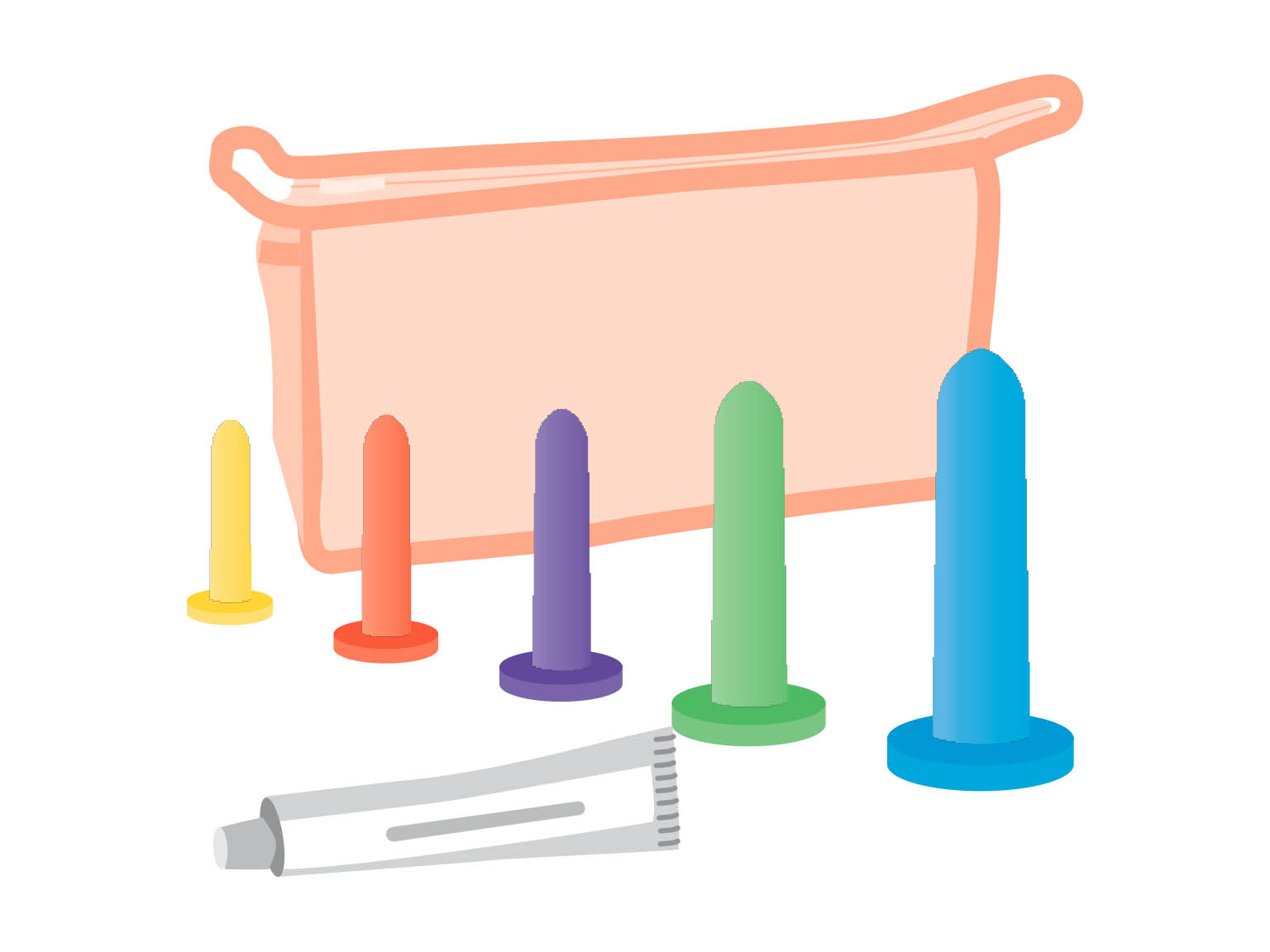
Vaginal dilators can help keep your vagina open and flexible after treatment. They are made from plastic or silicone and come in a range of sizes. You usually start with the smallest dilator, and as each one becomes more comfortable, you can move on to using the larger dilators. Make sure any soreness has settled down before you start using dilators (usually 4–6 weeks after your last radiation therapy session).
To use the dilator, find a private space. Apply a water-based lubricant to the dilator, slowly insert it into the vagina, then gently rotate it. Leave the dilator in for 5–10 minutes. You can do this once or twice a day for the first few months, and then 2–3 times a week for several months after that, as advised by your treatment team. You may also like to see a women’s health physiotherapist. If you have a history of sexual trauma, speak with a psychologist or counsellor.
Impact on sex and intimacy
Cancer of the uterus can affect your sex life in both physical and emotional ways. Some treatments can cause dryness and narrowing of the vagina, which can make sexual penetration difficult or painful. Also, removal of the uterus, cervix and ovaries can change how you experience sexual pleasure and orgasm.
Your treatment team may advise using vaginal dilators, lubricants, moisturisers or hormone creams. It may be helpful to explore ways to orgasm (climax) without penetration or to use masturbation to see what might work for you.
You may lose interest in intimacy and sex (low libido) because of the hormonal changes of menopause, the stress of the cancer experience, the fatigue caused by treatment, and changes in how you feel about your body (body image). It may help to remember that for most people, sex is more than arousal, intercourse and orgasm. It involves feelings of intimacy and acceptance, as well as being able to give and receive love. Closeness and sharing can still be part of your relationship.
If you have a partner and do not feel like having sexual intercourse, or if you find it uncomfortable, talk openly with them about how you’re both feeling, and take things slowly by starting with hugs or a massage rather than penetrative sex. You may both need to be patient – things often improve with time and practice.
If you have ongoing concerns about how treatment has affected your sex life, talk to your GP or gynaecological oncologist or ask for a referral to a psychologist or sexual therapist.
Key points about managing side effects
Menopause and fertility
- If you have not yet been through menopause, surgery or radiation therapy for cancer of the uterus will cause your periods to stop. You will experience symptoms of menopause.
- Even if you have been through menopause, you may find that menopause symptoms return.
- Treatment may affect your ability to get pregnant. If you are concerned about fertility, discuss this with your doctor before treatment starts.
Fatigue
- It is common to feel very tired during and after cancer treatment.
- Plan your daily activities, do some regular exercise, and ask for help around the house.
- Consider seeing a physiotherapist, exercise physiologist or joining a specialised cancer exercise program.
Other side effects
- If you lose control of your bladder and you leak urine (urinary incontinence), pelvic floor exercises can help.
- Constipation or diarrhoea can often be managed with changes to your diet.
- Some people develop swelling in the legs and/or vulva (lymphoedema). See your doctor about this; exercises, massage and compression stockings may help.
- See your doctor quickly if your legs become red or swollen or if you have a fever, as these may be signs of an infection called cellulitis.
- Some treatments can make the vagina narrow and dry. Vaginal dilators, moisturisers, lubricants and hormone creams may help.
- You may feel less interested in sex because of physical or emotional changes. Take things slowly and talk openly with your partner.
Looking after yourself
Cancer can cause physical and emotional strain, so it’s important to look after your wellbeing. Cancer Council has free booklets and programs to help you during and after treatment. Call 13 11 20 to find out more, or visit your local Cancer Council website.
Eating well – Healthy food can help you cope with treatment and side effects. A dietitian can explain how to manage any special dietary needs or eating problems and choose the best foods for your situation.
Staying active – Physical activity can reduce tiredness, improve circulation and lift mood. The right exercise for you depends on what you are used to, how you feel, and your doctor’s advice.
Complementary therapies – Complementary therapies are designed to be used alongside conventional medical treatments. Therapies such as massage, relaxation and acupuncture can increase your sense of control, decrease stress and anxiety, and improve your mood. Let your doctor know about any therapies you are using or thinking about trying, as some may not be safe or evidence-based.
Work and money – Cancer can change your financial situation, especially if you have extra medical expenses or need to stop working. Getting professional financial advice and talking to your employer can give you peace of mind. You can also check whether any financial assistance is available to you by asking a social worker at your hospital or treatment centre or calling Cancer Council 13 11 20.
Relationships – Having cancer can affect your relationships with family, friends and colleagues in different ways. Cancer is stressful, tiring and upsetting, and this may strain relationships. The experience of cancer may also result in positive changes to your values, priorities or outlook on life. Give yourself time to adjust to what’s happening, and do the same for those around you. It may help to discuss your feelings with each other.
Effect on your emotions
Changes to your body can make you feel self-conscious and affect the way you feel about yourself (your self-esteem). You may feel less confident about who you are and what you can do.
It is normal to experience a wide variety of emotions after treatment, including anger, fear and resentment.
Everyone has their own ways of coping with their emotions. It is important to give yourself and those around you time to deal with the emotions and adapt to the changes that cancer can cause. Call Cancer Council 13 11 20 for help and support.
You may also find it helpful to see the psychologist in your cancer centre about the impact of cancer on your mental health.
Sources and references
Acknowledgments
This edition has been developed by Cancer Council NSW on behalf of all other state and territory Cancer Councils as part of a National Cancer Information Subcommittee initiative. All updated content has been clinically reviewed by Professor Alison Brand, Clinical Professor, The University of Sydney and Director, Department of Gynaecological Oncology, Westmead Hospital, NSW. This edition is based on the previous edition, which was reviewed by the following panel: A/Prof Orla McNally, Consultant Gynaecological Oncologist, Director Oncology/Dysplasia, Royal Women’s Hospital, Honorary Clinical Associate Professor, University of Melbourne, and Director of Gynaecology Tumour Stream, Victorian Comprehensive Cancer Centre, VIC; A/Prof Yoland Antill, Medical Oncologist, Peninsula Health, Parkville Familial Cancer Centre, Cabrini Health and Monash University, VIC; Grace Guerzoni, Consumer; Zeina Hayes, 13 11 20 Consultant, Cancer Council Victoria; Bronwyn Jennings, Gynaecology Oncology Clinical Nurse Consultant, Mater Hospital Brisbane, QLD; A/Prof Christopher Milross, Director of Mission and Radiation Oncologist, Chris O’Brien Lifehouse, NSW; Mariad O’Gorman, Clinical Psychologist, Liverpool Cancer Therapy Centre and Bankstown Cancer Centre, NSW. We would like to thank all the health professionals, consumers and editorial teams who have worked on current and previous editions of this title.
References
1. National Comprehensive Cancer Network (US), NCCN Clinical Practice Guidelines in Oncology (NCCN Guidelines): Uterine Neoplasms, Version 3.2025.
2. Gynaecological Oncology Network, Gynaecological Cancer: A Guide to Clinical Practice in NSW, Agency for Clinical Innovation, Chatswood, 2019.
3. Dagher C et al., “Moving into the modern era of molecular classification for endometrial cancer,” Journal of Surgical Oncology, vol. 129, iss. 1, 2024, pp. 120-125.
4. Australian Institute of Health and Welfare (AIHW), Cancer Data in Australia, AIHW, Canberra, viewed 12 September 2025, available from: aihw.gov.au/reports/cancer/ cancer-data-in-australia.

Uterine Cancer
Cancer Council 13 11 20
Call us to talk to a specially trained health professional for free and confidential support and information.